
Helical Piers Near Foundations Are a Late-Stage Reality
Every experienced builder knows this rule, even if it gets ignored under pressure: foundations should never bear on excavated backfill. Footings belong on native, undisturbed soil; without compromise. Yet late in the construction process, that rule gets tested. This is where helical piers near foundations stop being a ‘nice-to-have’ and become THE practical solution.
The Backfill Problem
Once a basement or foundation wall is excavated, formed and poured, the surrounding soil is replaced, and compacted to varying degrees. That disturbed zone might look solid, but it is no longer native. Later in the project when decks, porches, awnings, and column footings are added, the footing locations are almost always compromised. Let’s be clear about the problem most home builders realize a little too late:
- The foundation work removed native soils near the foundation
- Backfill was placed and compacted in lifts (hopefully)
- That soil, adjacent to the foundation, is now structurally unreliable for footings
Porch columns, deck posts, and entry canopy footings are all staged late in the build to maintain access to the structure during the more critical stages like framing, sheathing, stucco, siding etc. The original drawings often assume “typical” footings, but the site conditions are no longer typical if staged well.
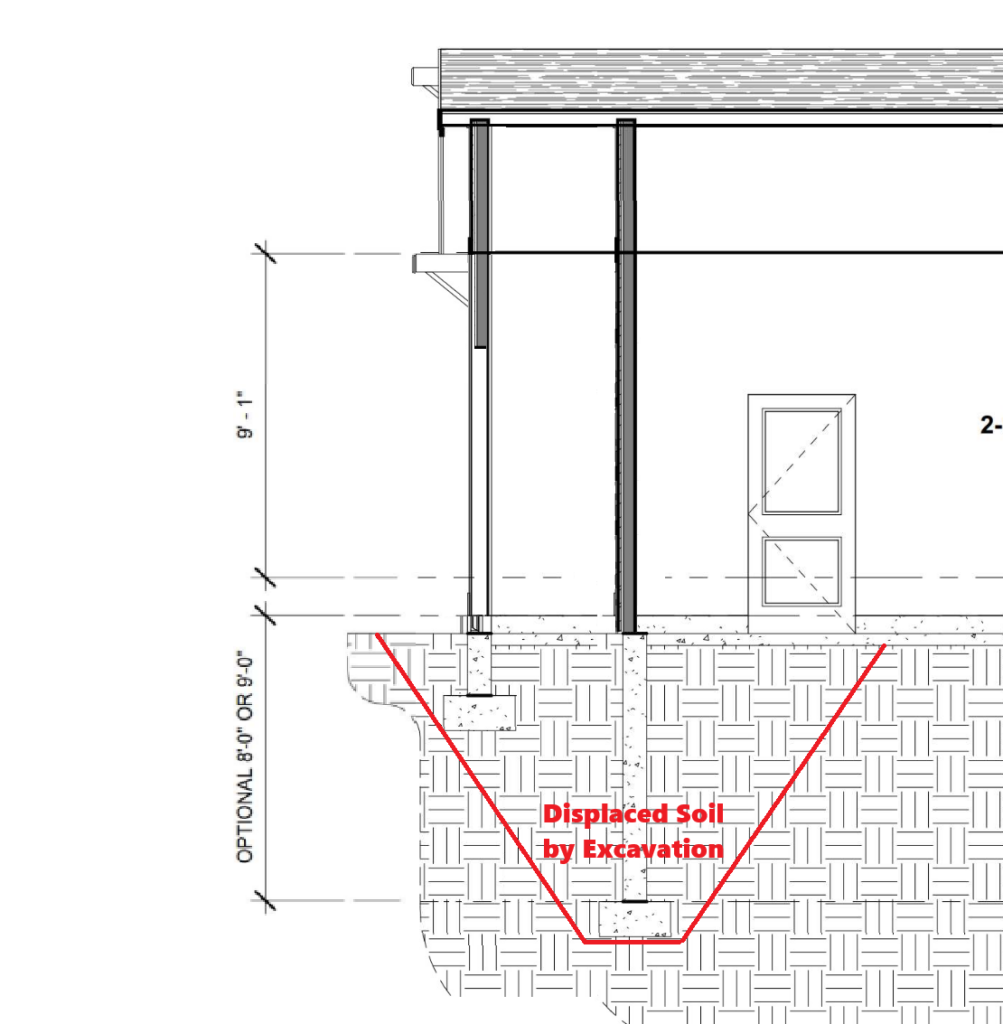
If you follow code and the drawings, you now have a choice: Over-excavate until you hit native soil (can be 6–10 feet down if near a basement) or accept risk and place footings in questionable material. Neither option is attractive in the final stretch of a project; and no seasoned builder enjoys this decision.
Why Digging Deeper Is a Lose-Lose Move
Reaching native soil after backfill sounds straightforward on paper. In reality, it causes problems fast and is almost always self-performed by the GC. You don’t want to spend your time hand digging next to finished foundations, risk the finished siding, call a near-empty concrete truck or delay the landscaping. Late-stage footing work is a place all GC’s have been, and never at a convenient time. All these obstacles and we still haven’t mentioned rebar, forms, inspection and Simpson Post Bases.
This is often the point where the poor-quality contractor starts using terms like “It’ll probably be fine” or “Thats probably deep enough”. These are the contractors that spend their days addressing warranty work, chasing blue tape inspections and have very few repeat customers. At Utah Screw Pile, we fix failed footings for home owners that hired bargain contractors just a few years prior.
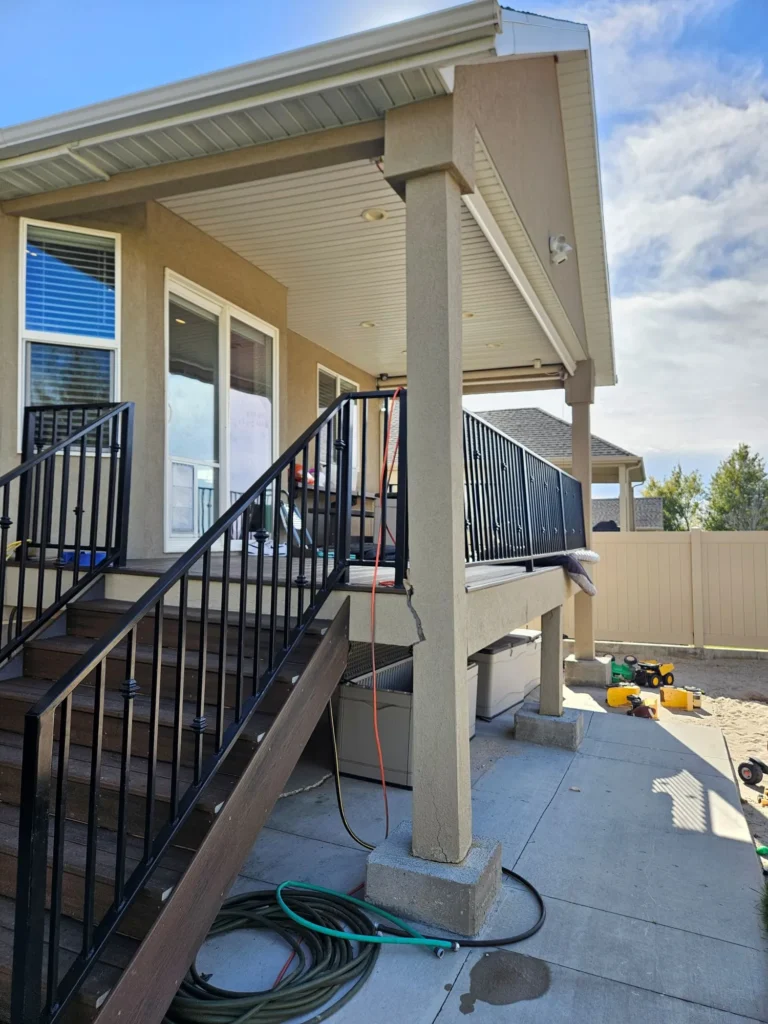
Saving a few thousand dollars at the end of a build isn’t worth risking your name, especially when the fix later is always more expensive and is a sure-fire way to lose your customer loyalty. This is where Helical Piers near foundations is a viable option on how you solve this issue.
Helical Piers Near Foundations Bypass the Backfill Issue
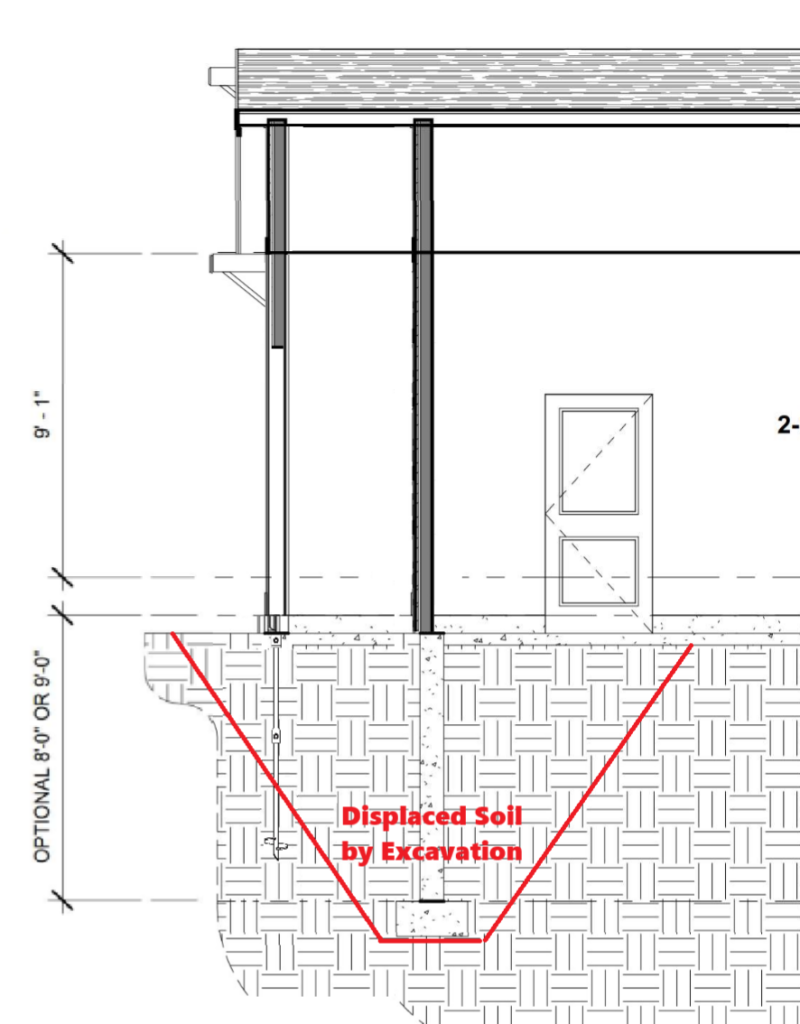
Helical piers don’t rely on surface soil. They transfer structural load through weak or disturbed material and bear in competent native soil. Helical Piers are International Building Code compliant, in fact, every CHANCE product Utah Screw Pile installs is third party tested and is code compliant with the most agencies of any manufacturer. (See list here)
This isn’t theory or snake-oil. It is standard practice on new homes, remediation and commercial work. That means you are free from self-performed labor, backfill performance, quality risk and squeezing another load of concrete near some finished siding on a late notice. Consider the confidence of disregarding questionable backfill near the foundation and getting a little ahead on your schedule later in the project.
When Helical Piers Near Foundations Make the Most Sense
Helical piers are a fantastic solution and seem to solve these last-minute headaches. They’re not for every application, but they excel in specific late-stage scenarios:
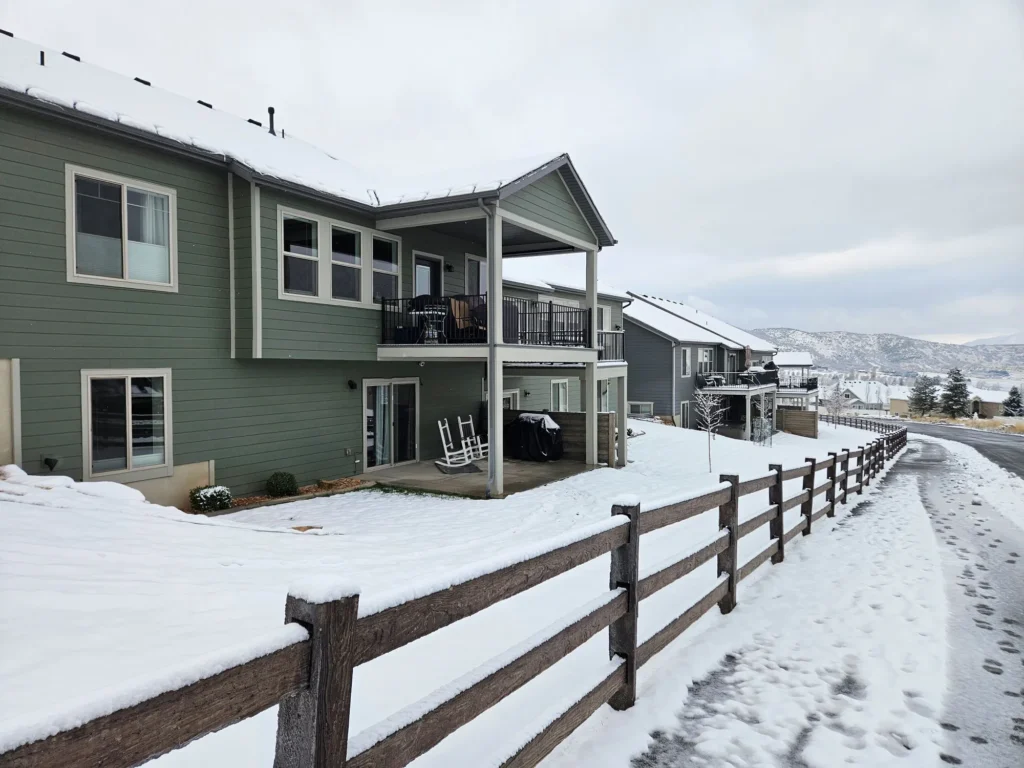
- Porch columns
- Awnings or entry structures tied into finished homes
- Decks – even if final grading isn’t complete
- Tight access near finished foundations
- Poor soils you wouldn’t build your own home built on
In these cases and many others, Helical Piers near foundations often cost less overall than concrete footings.
Speed, Predictability, and Accountability
From a builder’s perspective, your real value isn’t only time and money. (Although installing your awning footings in an hour feels like cheating) Helical piers can be installed in tight quarters near your existing foundations, in small backyards, side yards and on finished landscaping with minimal disturbance. Helical piers are installed in a matter of hours, set to a precise elevation and capped by your chosen bracket.
A helical pier used as a spot footing allows for immediate load capacity, zero excavation, penetration to native soils, and a verifiable capacity you will know before our team leaves your site. A copy of an installation report is received within 24 hours of our trained team member completing the work. Our installers at Utah Screw Pile each receive specific training by our manufacturer, assuring you receive a report that does not guess, estimate or compromise the loads you need. After all, your margin is already set and your reputation is on the line.
Choosing the Right Tool
Helical Piers are an engineered deep foundation system that is affordable enough to be considered on single family residences and small projects; contrary to any misconceptions that label helical piers as gimmicks or novelty solutions.
Using helical piers near foundations isn’t about quick-and-easy, it’s about avoiding unnecessary work and risk that doesn’t add value to your project. At Utah Screw Pile, we work with quality builders. These builders are good communicators, competent builders with repeat customers. They set a schedule, work through the obstacles and proudly present their work to the harshest of scrutiny. These builders adopt methods that reduce risk, maintain margins and solve obstacles without compromising the structure. Utah Screw Pile and Helical Pier is honored to offer this particular tool to support quality workmanship that we ourselves abide by.
Final Thought for Builders
Maybe you’ve been there. If you’ve ever:
- Dug deeper than planned just to “get to good dirt”
- Stayed late onsite to stay ahead of framers or landscapers
- Wondered whether a hurried late-stage footing would settle
- Lost sleep over a porch column near backfill
Then you already understand the problem.
Helical piers are engineered. When installed near existing foundations, they often represent the cleanest, fastest, and most defensible solution available. Utah Screw Pile is your call to make for a subcontractor that specializes in this very solution. Allow us to save you time and money by Contacting Us. or calling our office: 801-900-3053.