Helical Pier Best Practices in Utah
Helical Pier Best Practices in Utah are about more than drilling a short, shallow hole. A foundation only performs when piers are installed to the correct torque and depth. At Utah Screw Pile, we rarely bid less than 10 feet, because most helical pier installations in Utah require more than 5 feet of depth. By following true best practices, we help customers avoid surprise charges and ensure their foundation will remain strong for decades.
Why a 5 Ft Helical Pier Bid Ignores Best Practices
Some contractors bid only 5 feet deep to make their price look attractive. But in reality, very few piers in Utah stop at 5 feet. Soil conditions here typically require piers to be installed between 7 and 14 feet for loads under 12,000 pounds.
If a contractor bids at 5 feet, the price will almost always increase once the job starts. That’s because additional depth and hardware are added as a surprise “change order.” Homeowners and general contractors often end up paying more than they planned when only depth is quoted. We hope this isn’t the case, but if that happens to you, ensure to ask questions and be curious so the contractor explains the change in price clearly, and can back that up with documentation, certification and licensing.
The Science Behind Proper Depth
Helical piers aren’t just about depth, they’re about torque. This has been discussed in a previous article HERE. (Second paragraph) Best practices require that consistent torque is achieved over the final 3 feet of installation. In fact, all American helical pier design engineers require a torque reading as the average torque over the final 3 ft of installation. Without this, the pier may not hold the intended load.
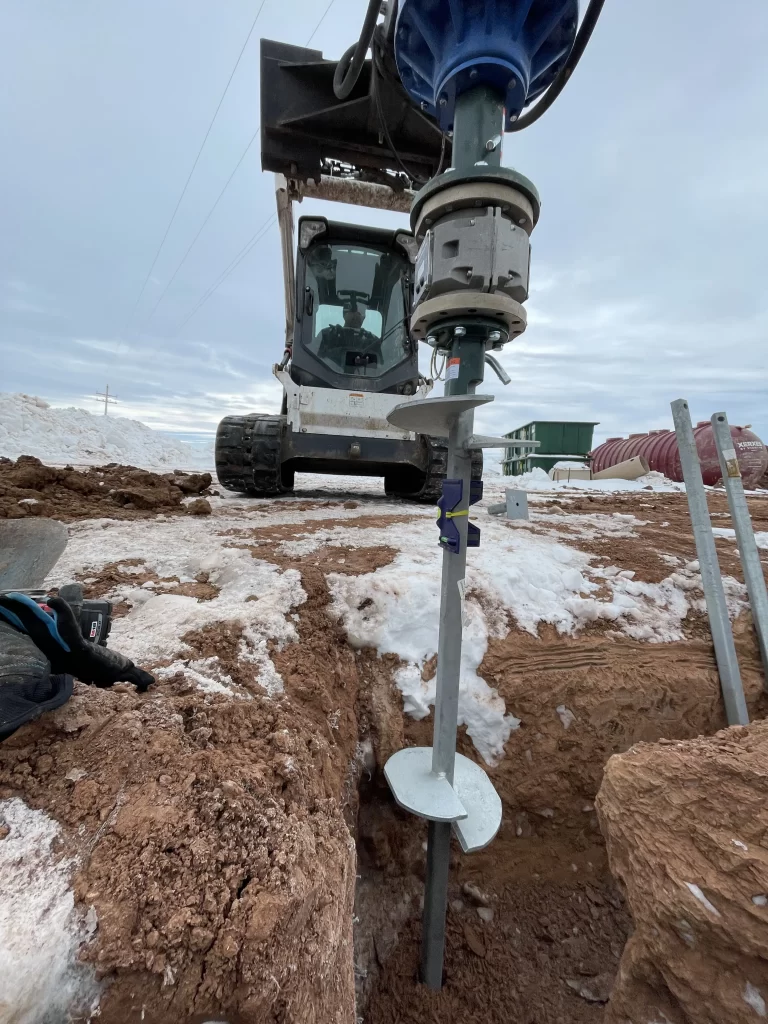
Building codes across the US require foundations to extend below frost depth, which in Utah is about 36 inches. (deeper for Park City and other high-elevation locations) Installing to frost depth isn’t the only required parameter for a long term deep-foundation. A properly installed helical pier must be spun tight enough until the design torque is reached, giving confidence in its load-bearing capacity. Whether this is at 5 or 35 ft deep is up to the soil profile and helical pier design.
Utah Screw Pile’s Approach to Helical Pier Best Practices
At Utah Screw Pile, we follow the guidance of American helical pier manufacturers and their engineers. Every pier we install is designed to hold twice the required load. This is called a ‘safety factor’, and is required for every CHANCE® Helical Piers we install.
We also use a transparent bidding process. For example:
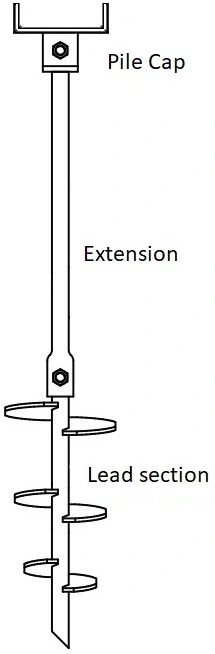
- A standard pier bid includes 10 feet of material (a 5 ft lead plus a 5 ft extension).
- If a pier needs to go 12 feet, we install 15 feet of material and trim off the extra to the exact needed height.
- The price for 11 feet or 15 feet is the same—no tricks, no hidden charges.
- If we do not achieve torque, we have a discussion with our customer, and proceed to find the necessary torque required to put our name behind the work.
- Our price for additional depth is ALWAYS explained in our contracts, and is never a surprise to our customers.
This method ensures our customers know the true cost up front. We only discuss changes if unusual conditions require going deeper than expected. That way, you are never surprised with inflated bills. Helical Piers can be uninstalled as easily as they go in. If the cost of a helical pier exceeds other methods, we’re happy to discuss the best solution for your project. If we’re not your best solution, let us find a contractor who is.
Why Torque & Depth Matter in Helical Pier Best Practices
Choosing Helical Pier Best Practices in Utah gives you peace of mind that your structure is supported properly. A pier installed too shallow can shift or fail under load or changing conditions. A pier installed to proper torque, at the correct depth, will protect your investment for the long term. See our available warranty HERE. This is why Utah Screw Pile avoids “cheap” bids that promise shallow piers. Instead, we do the job right the first time; zero compromises.
Learn More About Helical Pier Best Practices
If you’re curious about how helical piers compare to other deep foundation systems, check out our post on The Best Solution for Load-Bearing Foundations
We also share details about CHANCE® Helical Underpinning, one of the industry’s most trusted systems.
For general background on foundation requirements, the International Residential Code (IRC) provides insight into frost depth and building standards.
Final Thoughts on Best Practices in Utah
In the end, Helical Pier Best Practices in Utah come down to doing the job right the first time. Shallow bids may look cheaper, but true value comes from installing to proper torque and depth with transparent pricing. At Utah Screw Pile and Helical Pier, we stand behind every pier we install. When you’re ready for a foundation built to last, choose the team that follows Helical Pier Best Practices in Utah for every pier. Reach out to us HERE when you’re ready to talk more about your project.