
When you’re working with helical piers for your deck, foundation settlement, or new construction here in Utah, a qualified and trained contractor is often the smart and reliable solution. At Utah Screw Pile, we’ve worked across the Wasatch Front and beyond, navigating everything from clay-rich valleys to frost-heave prone ground. In this article, we will walk you through exactly what to expect during a helical pier installation, what makes it different in Utah’s unique terrain, and what we do at Utah Screw Pile to ensure a dependable foundation upgrade or new build.
Understanding the Site & Soil Before a Helical Pier Installation
Before any equipment or steel hits the ground, your first step of a helical pier installation is a site assessment. In Utah, this means:
- Defining the weight (footing loads) for each footing; whether you have a low-sitting deck, or a hot-tub on a hill, you’ll want to know how much weight each footing will require when complete.
- Review geotechnical reports if you have one available; a soils report is often where the requirements for a deep foundation are given on new builds.
- Check for frost depth; most areas in Utah require foundations to be at least 30″ below ground to prevent frost heaving. Some high-elevation locations like Heber City and Park City have deeper requirements as deep as 48″. Local variability in soil and drainage means we must make our decisions accordingly.
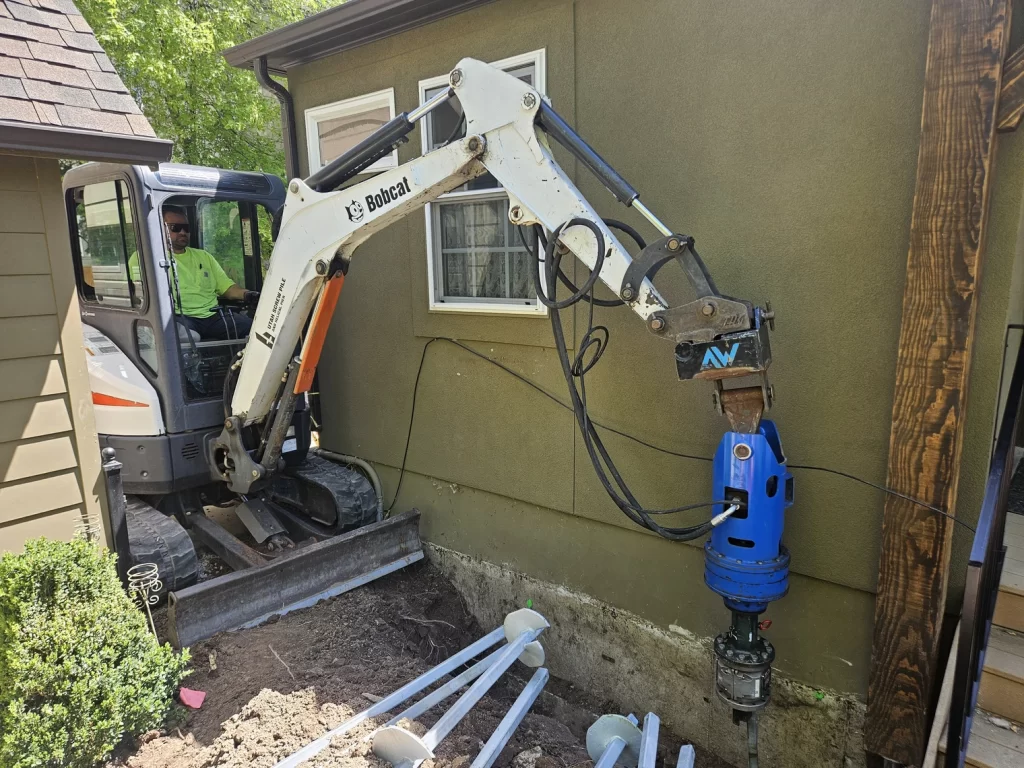
- Plan for equipment access, layout, and equipment positioning; though helicals require small equipment, planning ahead can prevent damage to landscaping.
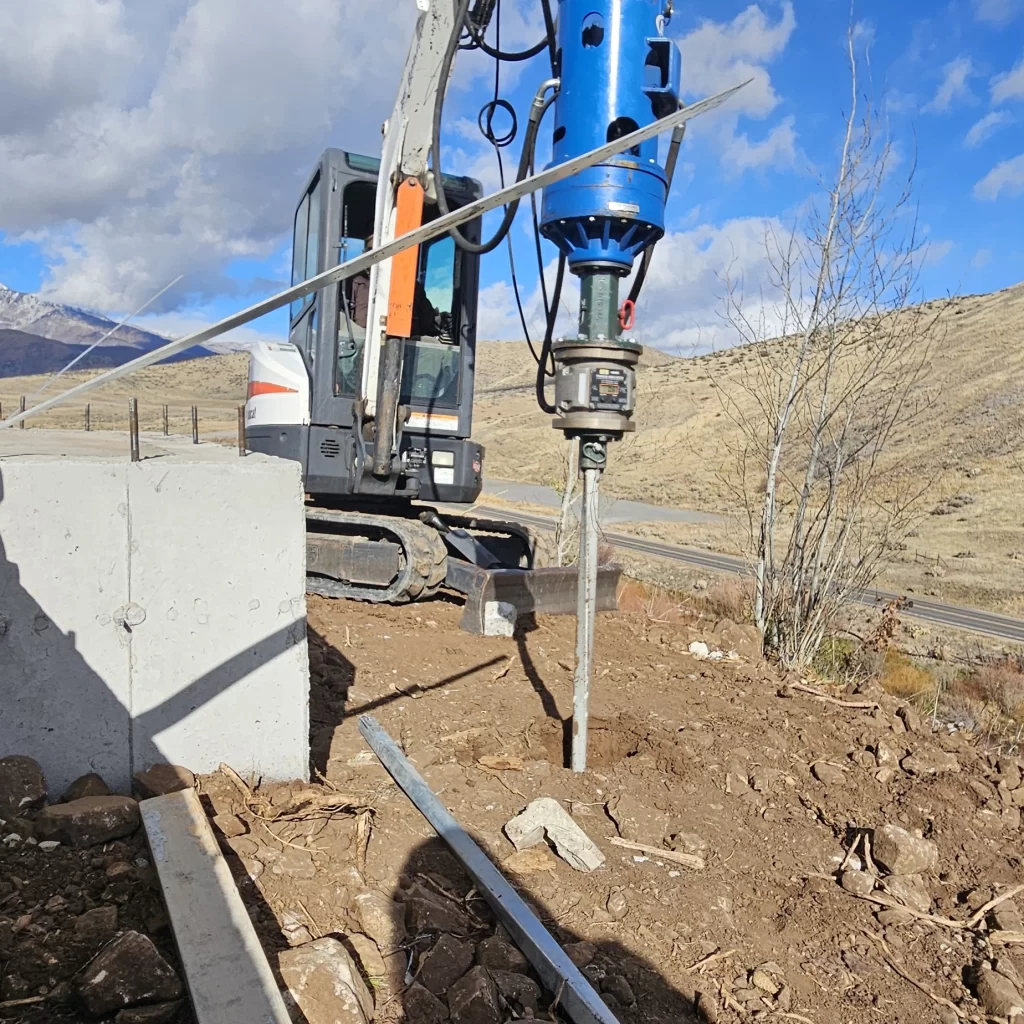
In short: we don’t just show up and “screw in” piers. Instead, we tailor the process for Utah-specific soil issues, load demands, and structural support goals.
What Happens During our Visit
Here’s a step-by-step walkthrough of how the actual helical pier installation happens and what homeowners, engineers and contractors should expect:
- Rig setup & locations marked
We arrive on site with our hydraulic drilling or torque-head equipment. The locations for each pier are laid out around the footing or structure and confirmed by drawing or customer. Access to the pier locations is reviewed. - Driving or “screwing” the helix into the ground
The helical shaft is advanced by our trained crews into the soil by slow and steady rotating of the pile. As we go deeper, we monitor installation torque carefully using a digital torque monitoring device. That torque has a direct relationship to the load capacity of the finished pier. - Reaching required depth/torque
At each location we verify we’ve met both minimum depth and minimum specified torque. We’re looking to securely tie into load-bearing soil that won’t settle or heave. A properly completed helical pier installation transfers weight from the structure, through the shaft, into stable ground. - Height adjustment and bracket attachment
Once installed, the helical pier is cut at the precise height and the chosen bracket is secured to the shaft. - Documentation and quality assurance
All torque data is recorded, including torque, depth, and other observations during the installation. These reports are often what is required by inspectors in lieu of a visual inspection, a sample can be seen here. - Finishing
Once all piers are installed and brackets attached, we demobilize and restore disturbed areas as best as possible. Further coordination with landscaping or structural contractors for next steps is also taken. Because a helical pier installation is less intrusive than many alternatives (like drilled shafts or large excavations), the disruption to the ground is minimized and the piles can be built on that same day.
Why a Helical Piers Make Sense in Utah Soils
Choosing a helical pier installation in Utah isn’t just convenient, it’s often the best engineering decision for the local conditions:
- Utah has one of the most unique gelogical profile per square mile than any other state. This means a foundation solution that works well for your home may not work for your neighbor one or two lots away.
- A helical pier installation reaches under the variable layers and embeds the foundation into stable ground that isn’t subject to the weathering, water and shifting of the surface.
- Because the equipment is compact and the process fast, a helical pier installation is less weather-sensitive (or less delayed by frost or snow) than large concrete footings.
- The torque-log to capacity relationship gives engineers confidence that the installed helical piers will perform to spec.
- For retrofit or under-pinning situations (settlement, existing homes) a helical pier installation is often far less invasive than fully excavating under footings. In fact, helical piers are the only small-form method of securing or lifting a foundation that abides by building code and engineering practices.
What You Should Ask or Expect from Your Contractor During a Helical Pier Installation
Since you’re investing in a foundation solution, here are the questions you should make sure get addressed during the helical pier installation process:
- What is the target depth and torque (or capacity) for each pier?
- How many piers and what spacing will be used? (Quality guidance suggests spacing of at least 5 times the largest helix diameter or 5 ft minimum in many cases.)
- How will equipment access, clearance, and landscaping restoration be handled?
- What documentation will you receive post-installation (torque logs, photos, pier locations)?
- What warranty or guarantee covers the helical piers and their performance? (See our 30-year Limited Transferrable Warranty)
- What happens if you hit unexpected soil conditions (rock, voids, high groundwater) during the helical pier installation?
At Utah Screw Pile we make all that part of our standard process with no hidden surprises. We pride ourselves in discussing the entire process with our customer; ask us anything!
Final Takeaway
A helical pier installation offers a smart, efficient, and proven foundation solution; especially in Utah’s tricky soil and climate conditions. From the planning stage through final documentation, you’ll know what to expect when we arrive onsite. With this knowledge, you will make the right decision and be confident your project is securely built to last.
Reach out to us at Utah Screw Pile today for a free foundation assessment and find out how a helical pier installation can provide the reliable support your structure needs.