Commonly when helping a home owner or customer understand helical piers, the question of how a helical pier is attached to your structure gets asked. Installing a helical pier into the ground is only half the job. A deep foundation is only as strong as the connection to the structure. Never neglect what happens at the top of the pier, where steel meets concrete, wood, or an existing foundation.
Much like foundations, helical piers are not “one-size-fits-all.” The way a pier connects to the building depends entirely on what you’re supporting: a new footing, an existing foundation, a timber beam, or something unconventional. This article walks through the most common termination methods and explains why experienced installers focus just as much on the cap as they do on the pile itself.
The Role of the Pier Cap (Why Termination Matters)
A helical pier transfers load from your structure down into competent, native soil. That load (or weight) can be pushing (compression) or pulling (tension) . Often when considering foundations, the default load requirement is compression as a means to keep the weight of the structure from sinking into soft earth. Tension loads are less common in small construction, but still have their place when considering wind, uplift or cantilevers of engineered decks. Regardless, that load must pass cleanly and predictably through a connection point to be anchored in sufficient soil. That’s the job of the pier cap or bracket.
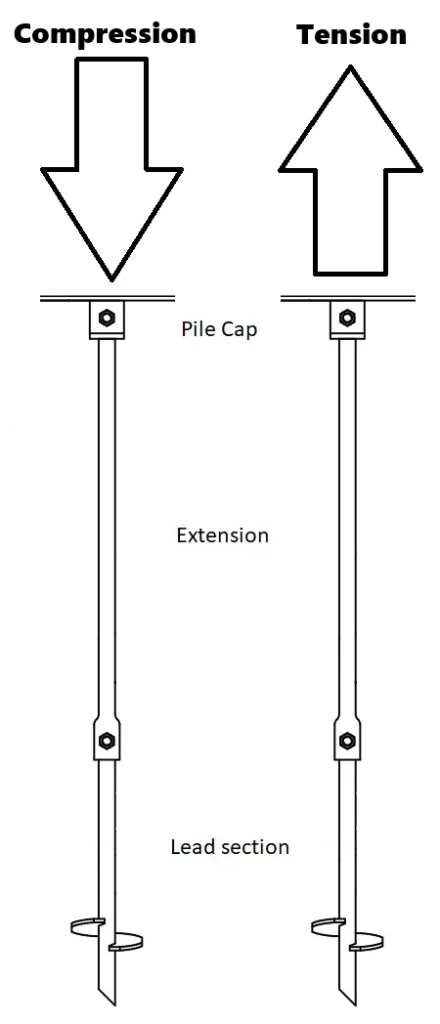
A properly designed cap will:
- Transfer loads at or above the capacity of the pile
- Mates with the structure’s material (concrete, CMU, wood, or steel)
- Allows for construction tolerances
- Complies with engineering designs and inspection requirements
Poorly designed or chosen caps can be expensive, introduce rotation, and short-change the pier itself. Read here for more info on what to expect when we arrive to install helical piers on your project.
How a Helical Pier Is Attached to Your Structure in New Construction
In new construction, the most common scenario is a helical pier supporting a poured concrete footing or grade beam. Connection to the footer is simple and can be done between excavation and forms for almost all new construction jobs.
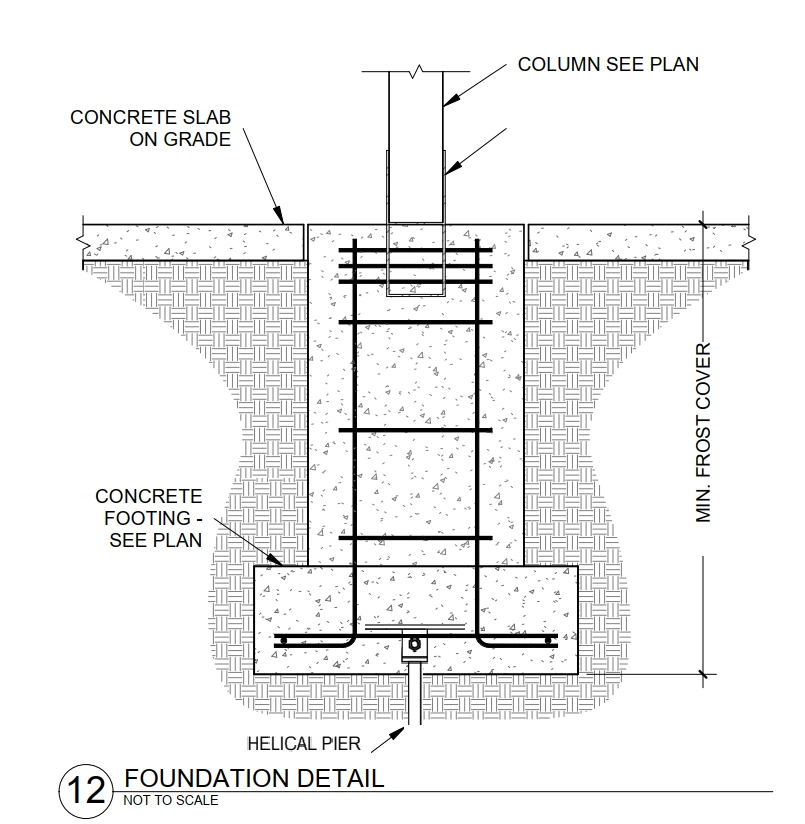
Typical process:
- Excavation of the foundation is completed
- Utah Screw Pile arrives and installs the deep foundation helical piers to the design parameters
- A new construction cap is attached to the pier shaft at a height that is just within the footer
- The concrete crew continues by forming, laying rebar and pouring, embedding the cap into the newly poured footing
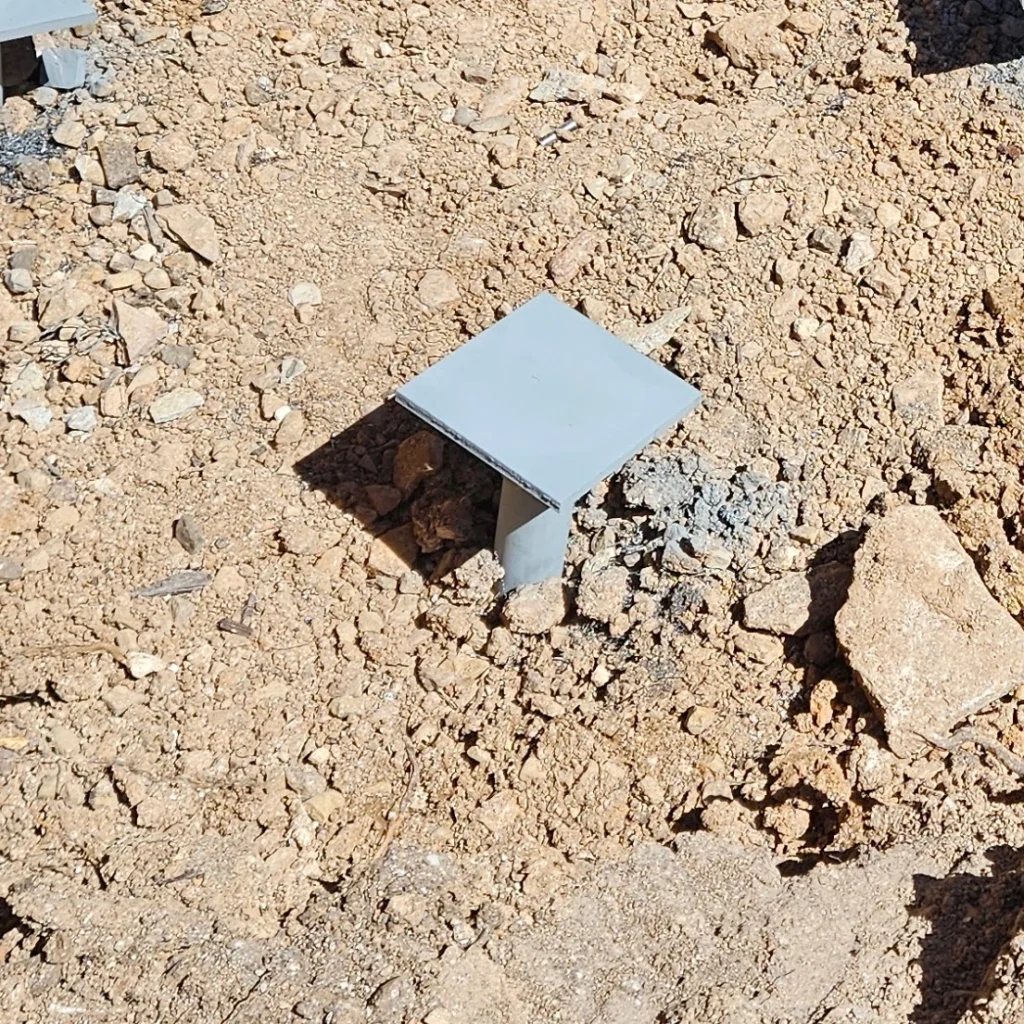
These caps are designed to create a direct path from the footing into the pier deep below the surface. Most come in a square plate, or with rebar welded to the plate itself.
How a Helical Pier Is Attached to Your Structure for Underpinning
Underpinning is a common term used in remedial construction where an existing foundation is in need of an update, repair or replacement. Underpinnings in the past have involved additional concrete, more rebar and all but rebuilding the entire footing while the home or structure is suspended above the work. Modern testing and research has allowed us to simplify the same function using helical piers and an engineered cap capable of similar or more weight.
When stabilizing an existing foundation, you’re no longer pouring new concrete. Instead, a helical pier physically grabs the structural footing that’s already there. That’s done with underpinning brackets designed, tested and offered by CHANCE.
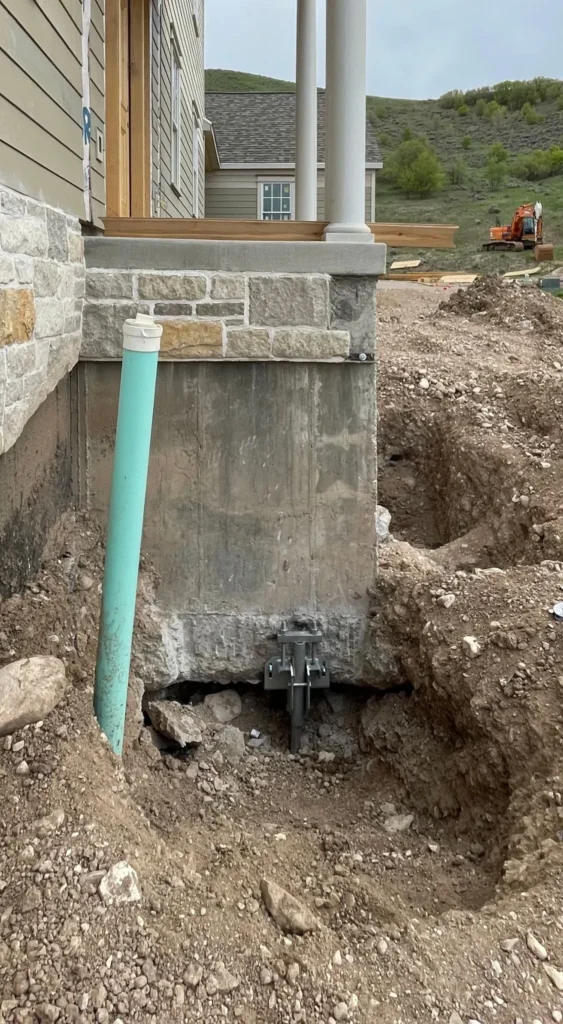
When Underpinning with a helical pier, the typical process includes:
- Soil is excavated at the footing
- The footer is trimmed to be flat with the foundation wall
- Helical piers are installed adjacent to the footing
- A steel underpinning bracket is bolted or seated under the foundation
- Load is transferred from the structure onto the pier
Given this process was formerly done over a matter of weeks in a dangerous manner, we now are able to offer a method that is safe that can be done in only a day or two. The bracket geometry matters: elevation control, bearing surface, and alignment all affect performance.
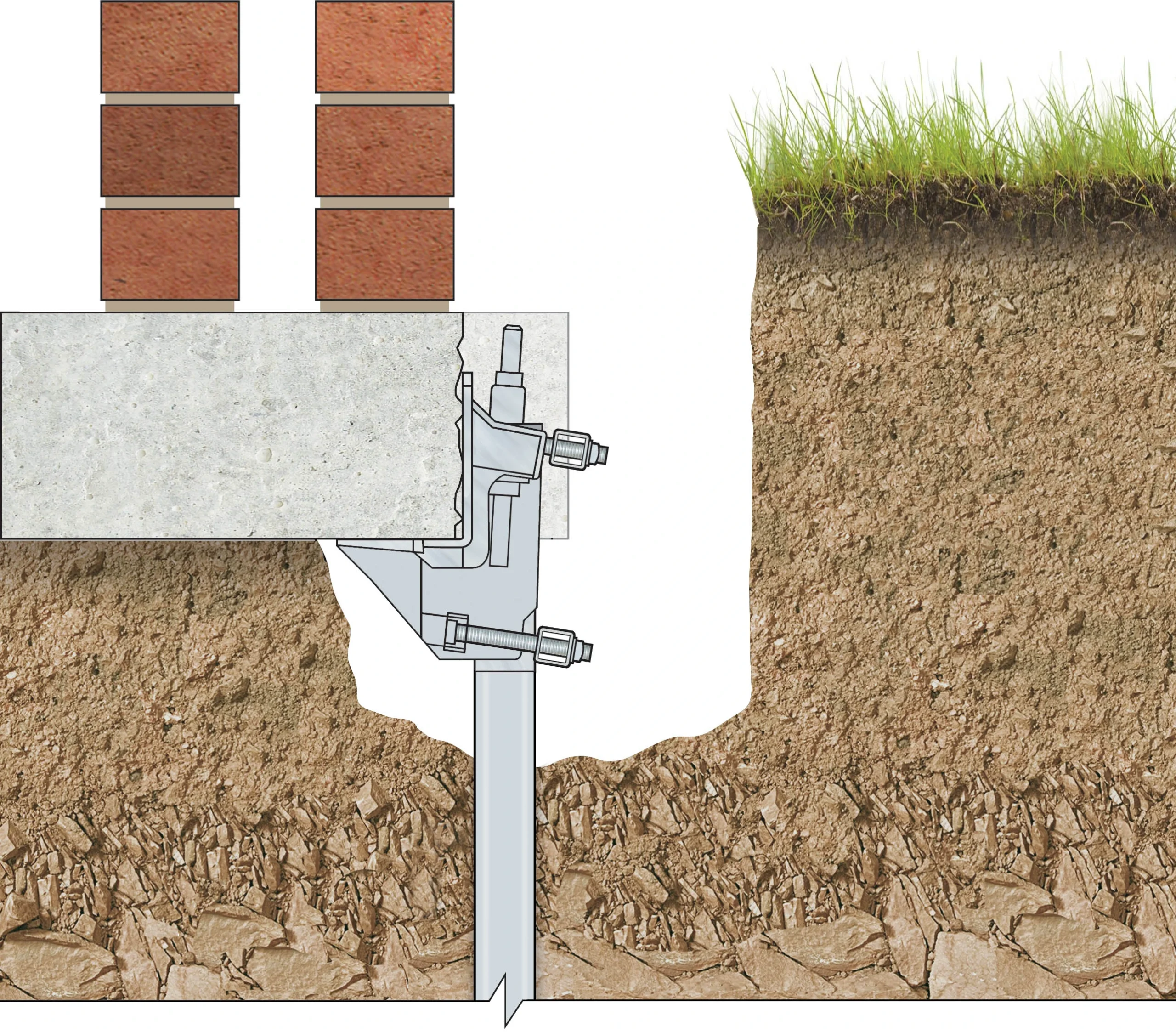
Used correctly, underpinning brackets can stop ongoing settlement, increase your footing capacity as well as allow a controlled lift a settled foundation.
Saddle Caps for Timber and Beam Construction
For decks, boardwalks, and timber-framed structures, saddle caps are often the cleanest solution. For our seasoned deck builders, you can be assured our custom saddle-brackets offer similar use case and increased loads as a Simpson Strong-Tie saddle bracket. These saddle caps offer a U-shaped steel bracket that cradles a wood beam to ensure the helical pier is attached to your structure.
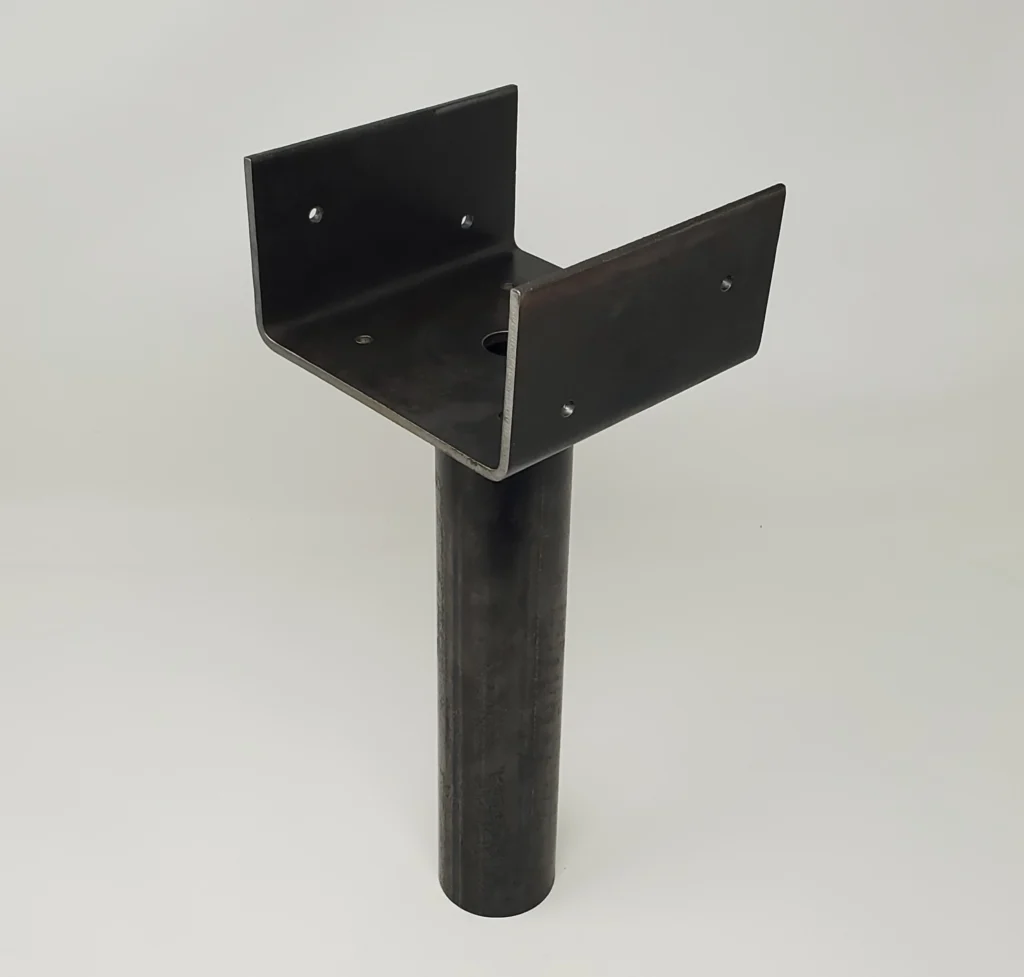
When securing your deck to a footing, you’ll find skipping sonotubes, rebar, concrete and cure-time will feel like cheating. Our prices are competitive with poured footings, and can be completed in only an hour.
Saddle caps excel when building decks, porches, suspended walkways, timber framing and other lightweight structures like tiny homes, sheds and small ADUs. Whether your post is rough cut, steel tubing or even directly connected to a deck beam, a pier can be directly connected to your structure without additional time or design.
Custom Solutions: When Off-the-Shelf Isn’t Enough
Not every project fits a catalog-selected cap, which gives us the necessity of custom solutions. Utah Screw Pile is known as the premier installer available to take your needs and develop a cap that will solve how a helical pier is attached to your structure. Custom solutions don’t mean custom-prices. Its rarely a premium price when selecting a pier cap from a trusted manufacturer or made locally in our qualified shop.
At Utah Screw Pile, we regularly design and fabricate custom pier caps and brackets for:
- Steel Columns
- Utility pole bases
- Odd foundation geometries
- Equipment bases
- Temporary or phased construction
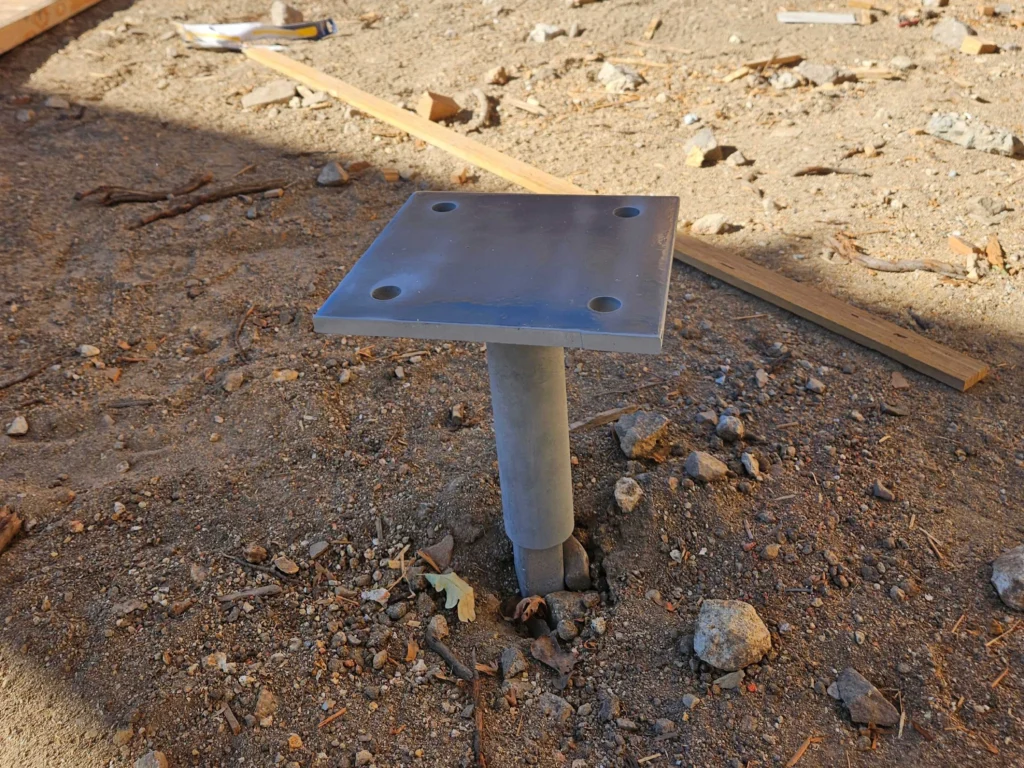
Our in-house weld shop can fabricate a solution that matches your exact conditions and needs without additional shipping or wait times.
One Last Point: The Pier Is Only as Good as the Connection
If you take one thing away from this article, it should be this: how a helical pier is attached to your structure is just as important as how deep it goes. The soil, the steel, and the structure must work together as a system for a viable solution. When following all of these parameters, helical piers provide fast installation, predictable performance, and long-term stability; this includes whether you’re building new, repairing old, or solving a problem no one else wants to touch.
Reach out to us or call 801-900-3053 to all us to solve YOUR structural needs.