Property owners are surprised to learn that most helical piers in Utah are installed deeper than 5 feet. While some contractors advertise shallow installations on their proposals, real-world soil conditions, frost depth requirements, and torque targets often require deeper foundation support systems.
Why Depth Matters for Helical Piers in Utah
Helical piers are a deep foundation element designed to transfer structural loads into the suitable soil layers below the surface. If the pier is too shallow, it will be subject to freezing temps, water and changing surface conditions. A shallow installation may appear acceptable initially, but surace soils contain old roots, displaced soil and other inconsistencies. This can lead to settlement and costly foundation issues where none were expected.
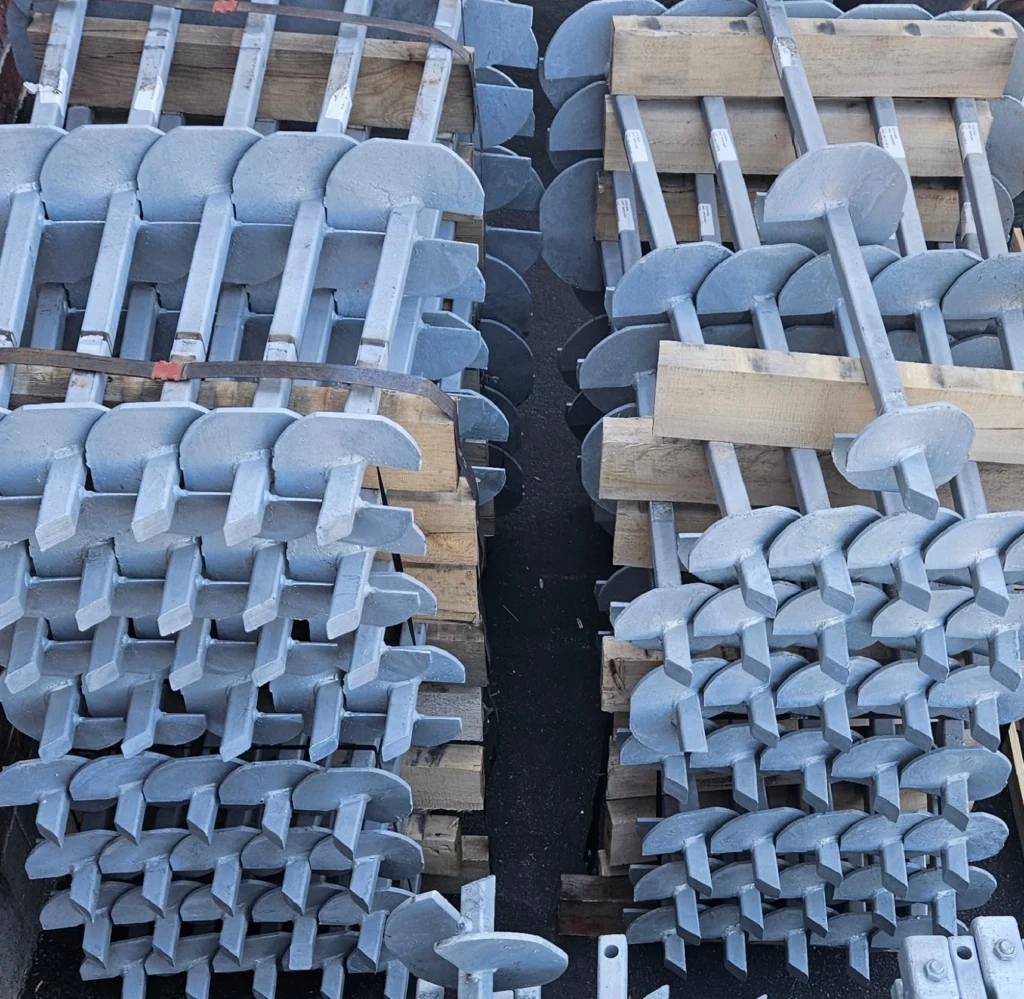
In some of the most mild applications, final installation depths in Utah commonly extend beyond 5 feet. Depending on site conditions and required loads, installations in the 7–14 foot range are often more realistic. Even in notoriously hard soils, like Park City and Heber.
Utah Soil Conditions Can Change Quickly
One of the biggest misconceptions about foundation work is that soil conditions remain consistent across a property. This may be true in other environments like the east coast, but in reality, Utah soil profiles can change dramatically within a short distance. We often say “a thrown rock can cross as many as 4 different soil types before it comes to rest”. We’ve seen conditions change dramatically within 20 ft of other piers.
Along the Wasatch Front, contractors frequently encounter:
- Expansive clay soils
- Loose and uncompacted fill material
- Old construction backfill
- Collapsible soils
- Moisture-sensitive layers
- Organic soils
These conditions can reduce the effectiveness of standard foundation systems. This is one reason experienced helical pier contractors rely heavily on torque monitoring during installation rather than simply targeting a minimum depth. Read more about our standard torque monitoring system.
Frost Depth Requirements in Utah
Another important factor is frost depth. In many parts of Utah, foundation elements are expected to extend below approximately 30 inches to help reduce movement caused by freeze-thaw cycles. While frost depth alone does not determine final helical pier depth, it establishes a minimum threshold for foundation support. The actual installation depth often extends much deeper once structural loading and soil performance are considered together. Frost depths are commonly given as design criteria by the governing body who will be issuing the permit.
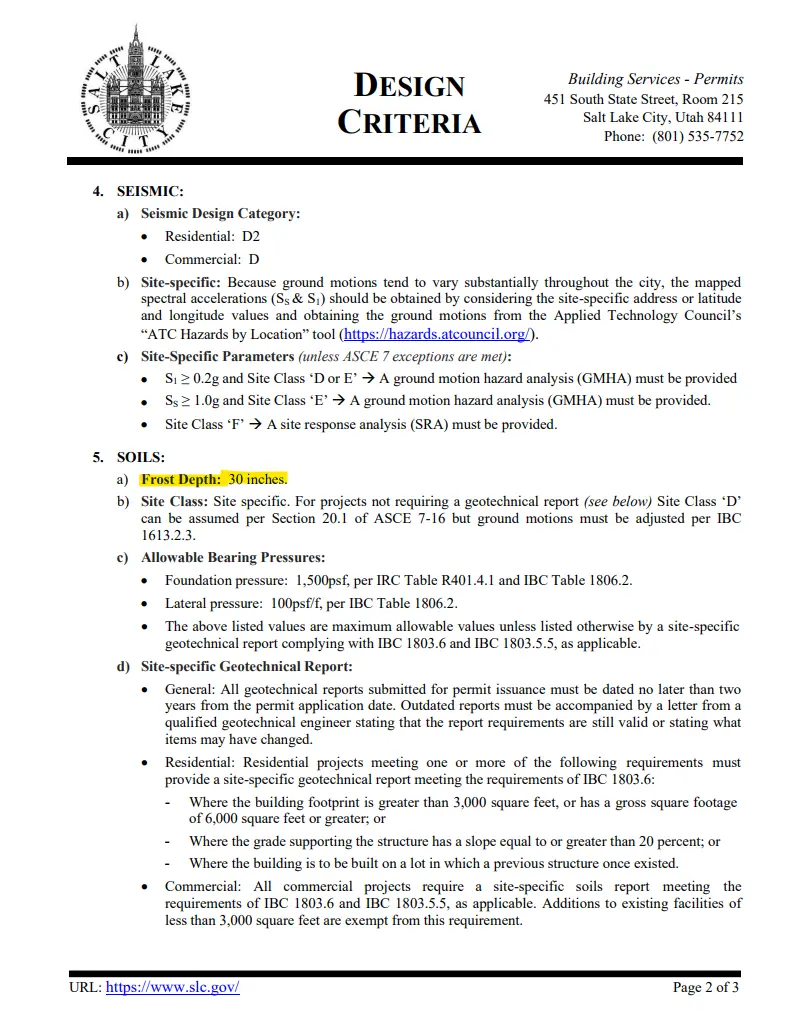
Shallow installations may not provide enough long-term stability in our high desert environment. When a minimum depth is required, our teams make no compromises.
Torque Matters For Helical Piers in Utah
One of the most important concepts in helical pier installation is the relationship between installation torque and pier capacity. (Read more) As a helical pier advances into denser soils, installation torque increases when finding suitable bedrock. Contractors and engineers use this torque information to help estimate the pier’s axial capacity during installation. The relation between torque and axial capacity have a strong enough correlation that our manufacturing partner has met and exceeded all building code requirements. (ICC-ES ESR-2794)
In all work we perform, the average torque over the final three feet of installation is the final recorded torque, ensuring our piles never become compromised or ever considered “good enough” on a hot summer day. Given surface soils are often organic and displaced soils, the first few feet of each helical pier in Utah are relatively inconsistent. This means we rarely quote less than 6 ft. The goal is not simply to install the shortest possible pier. The goal is to achieve reliable long-term foundation support based on actual site conditions.
Why Some Helical Pier Quotes Look Cheaper
When comparing bids, homeowners are sometimes surprised by large price differences between contractors. Almost all helical pier manufactures in Canada and the US engineer their hardware in 5 ft lengths and boast they can find sufficient torque before finishing the first lead. In many cases, lower bids rely on those 5 ft lengths as their ‘base-bid’. These assumptions do not reflect realistic installation conditions when installing helical piers in Utah, and often contain fine print to charge as much as $85/ft for additional depths! These surprises can happen only after the piers have been installed and the contractor gone. Rather than shallow depths or ideal conditions, we aim to support your structure, and do our very best to estimate to the proper depths.
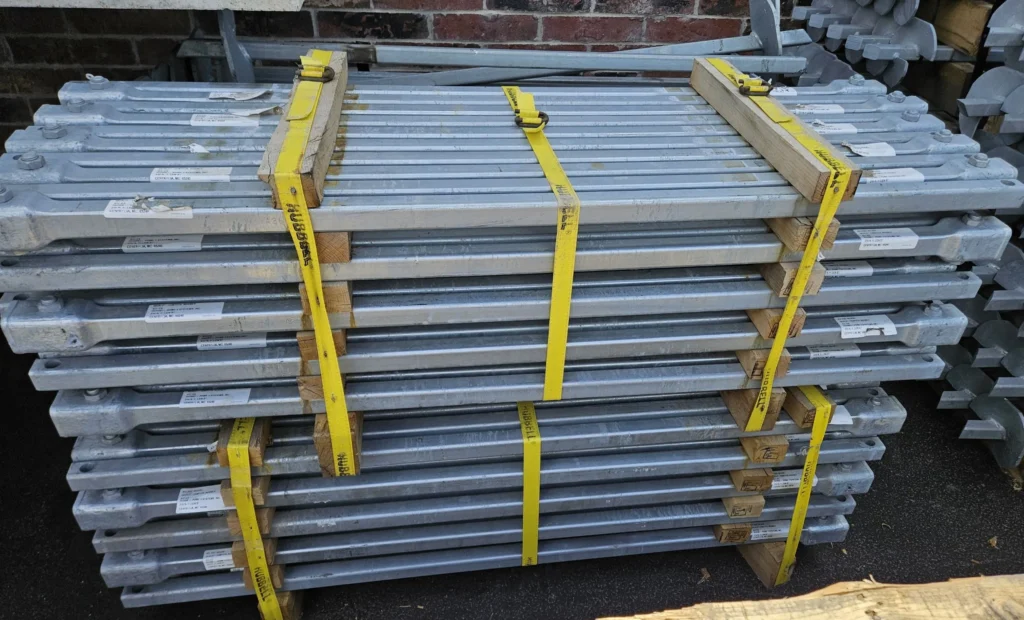
A lower initial bid is always enticing, but they can sometimes lead to unexpected additional charges, reduced safety margins and tough game-time conversations that put the customer in a tough spot. Experienced contractors often provide pricing that better reflects likely field conditions rather than optimistic minimum-depth assumptions.
Every helical pier will find torque at different depths. If we complete your job with surplus material, you see a credit on your final invoice and we leave your site knowing we left with a long-time customer. At Utah Screw Pile, we intend to be your reliable source for an accurate proposal and dependable work.
What Engineers and Inspectors Expect
Engineers and inspectors typically expect installations to include proper documentation and load verification. In fact, there is much less required of a helical piers in Utah than a poured footing; but proper record keeping and reliable manufacturing is the key difference that can keep your project from inspection issues.
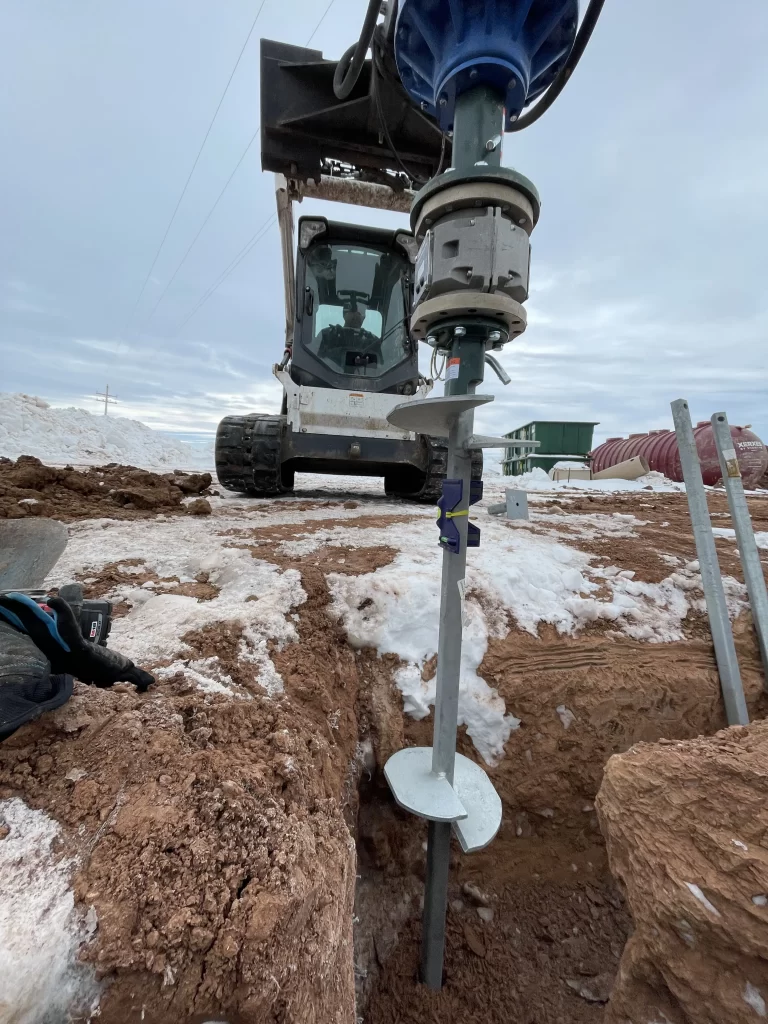
The installation record often includes:
- Torque monitoring calibration
- Installation depth/torque documentation
- Pier layout verification
- Approved hardware specifications and manufactures drawings
- Manufacturer engineering and test data
Copies of these reports are to be issued directly to the customer within 24 hrs of completing the work. If your contractor has not given you an installation report, you are entitled to one. Records are kept for every pier we’ve ever installed at Utah Screw Pile, so even our earliest piers from the previous decade are available to our customers when they call.
Choosing a Qualified Contractor For Helical Piers in Utah
Every helical pier installed is different. A qualified contractor should be willing to discuss realistic installation depths, soil conditions, torque requirements, and engineering expectations before work begins. Always ask the tough questions and never skip checking their active licensing. (DOPL License Lookup)
In Utah, deeper installations are often a part of achieving reliable foundation performance under unique soil conditions. While every project is different, the most important factor is not the shallowest possible installation. Ensure your project is based on experience, qualification and knowledge in deep foundations.
If you are reviewing helical pier bids or planning a foundation project, Utah Screw Pile & Helical Pier can help explain realistic installation expectations based on your site conditions, structural loads, and long-term foundation goals. Contact us here or call us at 801-900-3053